Wind Energy
 What is Wind Energy?
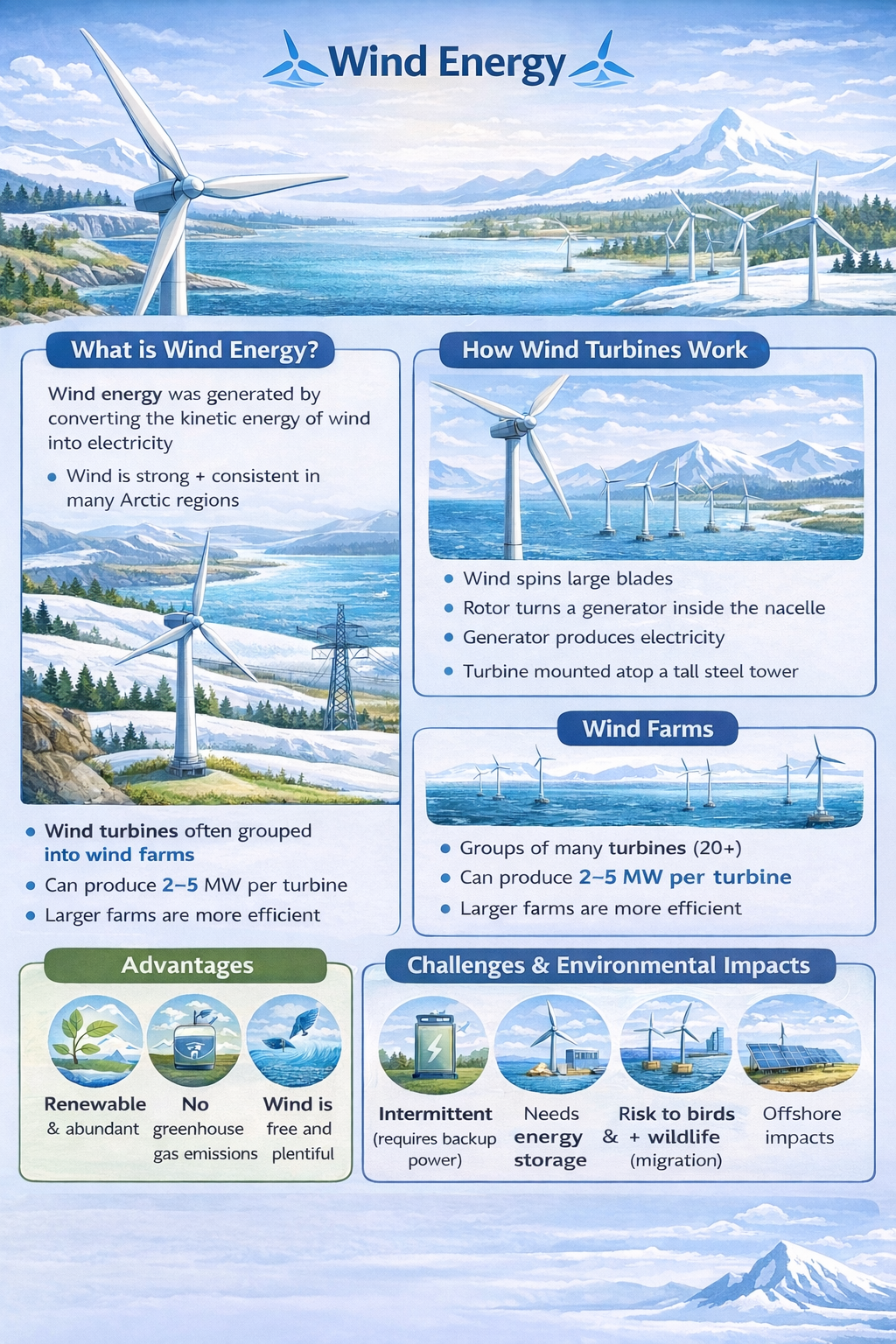
Wind energy is one of the oldest forms of energy used by humans and is now a key part of modern renewable energy systems. It is generated by converting the kinetic energy of moving air into electricity using wind turbines. In the Arctic and circumpolar regions, wind power is increasingly important due to strong and consistent wind conditions.
How Wind Turbines Work
Modern wind turbines typically consist of three blades made from lightweight composite materials such as fiberglass, mounted on a tall steel tower. As wind turns the blades, a rotor spins a generator that produces electricity. These systems are highly automated, efficient, and designed to operate in harsh environments, including cold Arctic climates.
Wind Farms and Energy Production
Wind turbines are often grouped into wind farms, which can range from a few turbines to hundreds of units. Modern turbines are significantly larger and more powerful than older models:
- Typical modern turbines produce 2–5 megawatts (MW) (much higher than older 10–15 kW units)
- Blade lengths can exceed 50–80 meters
- Offshore and Arctic turbines are designed to withstand extreme weather
Small-scale turbines can still be used for individual homes or remote communities, but larger wind farms are generally more efficient.
Wind Energy in the Arctic
Many Arctic regions have strong, steady winds, making them suitable for wind energy development. Wind power is especially valuable for:
- Remote communities with limited access to fossil fuels
- Reducing reliance on diesel generators
- Supporting sustainable local energy systems
The availability of open land and coastal wind resources makes wind energy a promising solution in the circumpolar North.
Advantages of Wind Energy
- Renewable and sustainable
- Produces no greenhouse gas emissions during operation
- Wind is abundant and freely available
- Suitable for both small-scale and large-scale use
Challenges and Environmental Impacts
Despite its benefits, wind energy also has limitations:
- Intermittency: energy production depends on wind availability
- Requires energy storage or backup systems
- Risk to birds and wildlife, especially along migratory routes
- Possible noise and visual impacts
- Offshore turbines may affect marine environments
Modern designs and better site planning are helping to reduce these impacts.
Current Developments and Future Potential
Wind energy technology continues to advance rapidly. Innovations include:
- Larger and more efficient turbines
- Floating offshore wind farms
- Hybrid systems combining wind with solar or storage
As part of the global transition to renewable energy, wind power is expected to play a major role in reducing carbon emissions, particularly in remote and energy-dependent regions like the Arctic.