Geothermal Energy
 What is Geothermal Energy?
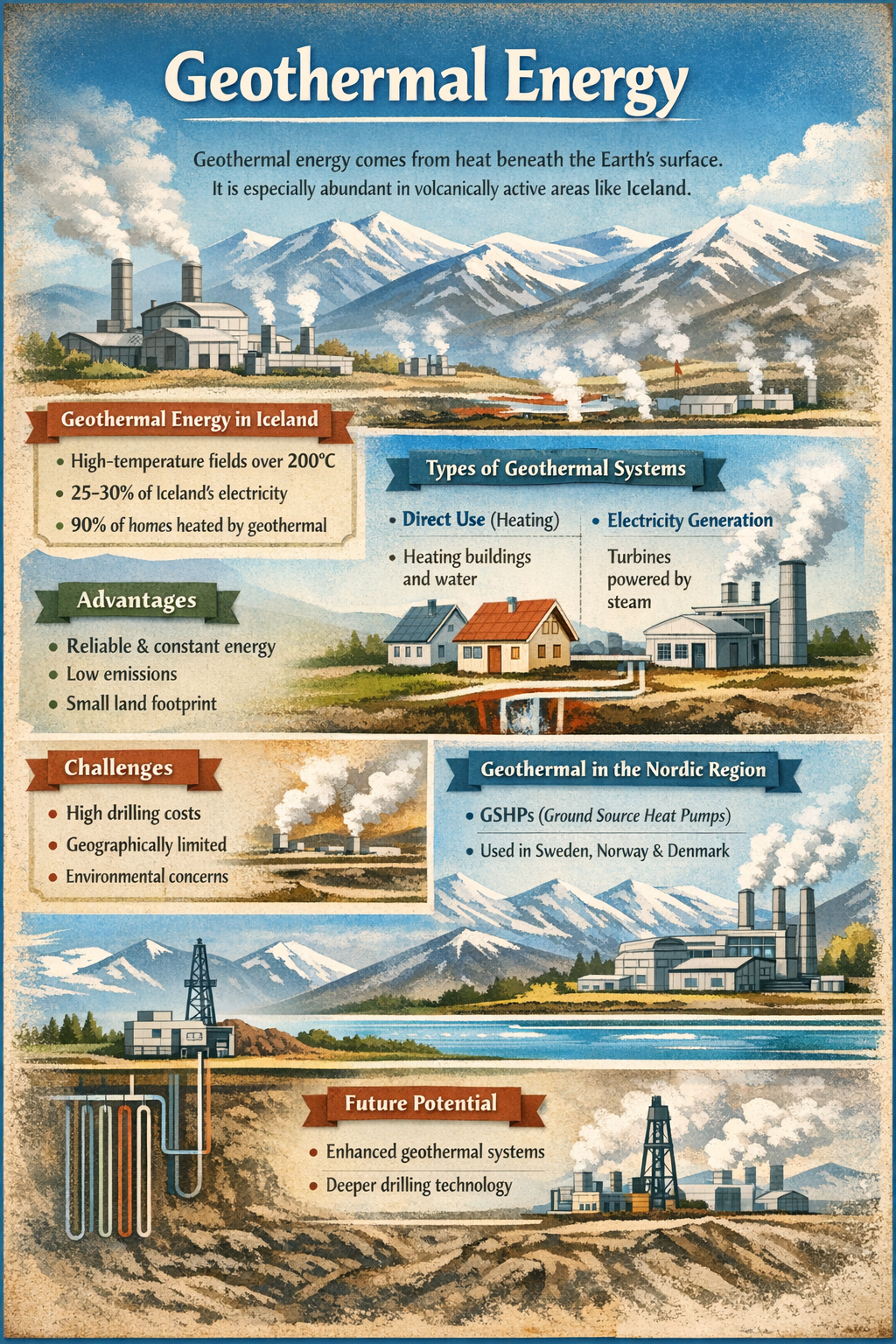
Geothermal energy is a renewable energy source that comes from heat stored beneath the Earth’s surface. This heat can be used directly for heating or converted into electricity. It is especially significant in regions with volcanic activity, such as Iceland.
Geothermal Energy in the Arctic
Geothermal energy is most abundant in the Arctic in Iceland, where it is linked to the volcanically active rift zone running from southwest to northeast across the country. In these areas, underground temperatures can exceed 200°C at depths of around 1,000 meters.
Iceland is often considered the global leader in geothermal energy use due to its unique geological conditions and long history of development.
Types of Geothermal Systems
Geothermal energy is used in two main ways:
1. Direct Use (Heating)
- Hot water from underground is used for heating buildings and supplying warm water
- Widely used in district heating systems
- Supports agriculture, such as heating greenhouses
2. Electricity Generation
- Steam or hot water is used to drive turbines and generate electricity
- Requires high-temperature geothermal fields
In addition, many countries use Ground Source Heat Pumps (GSHPs), which extract heat from the ground using closed-loop systems and boreholes, even in areas without volcanic activity.
Geothermal Energy in Iceland
Iceland has one of the most advanced geothermal systems in the world:
- Around 25–30% of electricity is generated from geothermal power
- About 90% of homes are heated using geothermal district heating
- Hot water is pumped from depths of several hundred to several thousand meters
- A nationwide network of pipelines distributes heat and water to homes and businesses
Geothermal energy is also used in agriculture, particularly for heating greenhouses to grow crops in cold climates.
Advantages of Geothermal Energy
- Reliable and constant energy source (not weather-dependent)
- Low greenhouse gas emissions
- Small land footprint compared to other energy sources
- Suitable for both electricity generation and direct heating
Challenges and Limitations
- Limited to areas with suitable geological conditions
- High initial costs for drilling and infrastructure
- Potential for minor environmental impacts (e.g. gas emissions, land subsidence)
- In some regions, less economically competitive than hydropower
Geothermal Energy in Other Nordic Countries
While Iceland leads in geothermal energy, other Nordic countries such as Sweden, Norway, and Denmark primarily use geothermal energy through ground source heat pump systems, rather than large-scale electricity production.
Current Developments and Future Potential
Advances in geothermal technology, including deeper drilling and enhanced geothermal systems (EGS), are expanding its potential beyond traditionally active regions. Geothermal energy is expected to play an increasing role in sustainable energy systems due to its reliability and low environmental impact.
Sources:National Energy Authority of IcelandEnergy Administration of Iceland, Sustainable Planning of Megaprojects in the North