
Exploitation & Local Communities
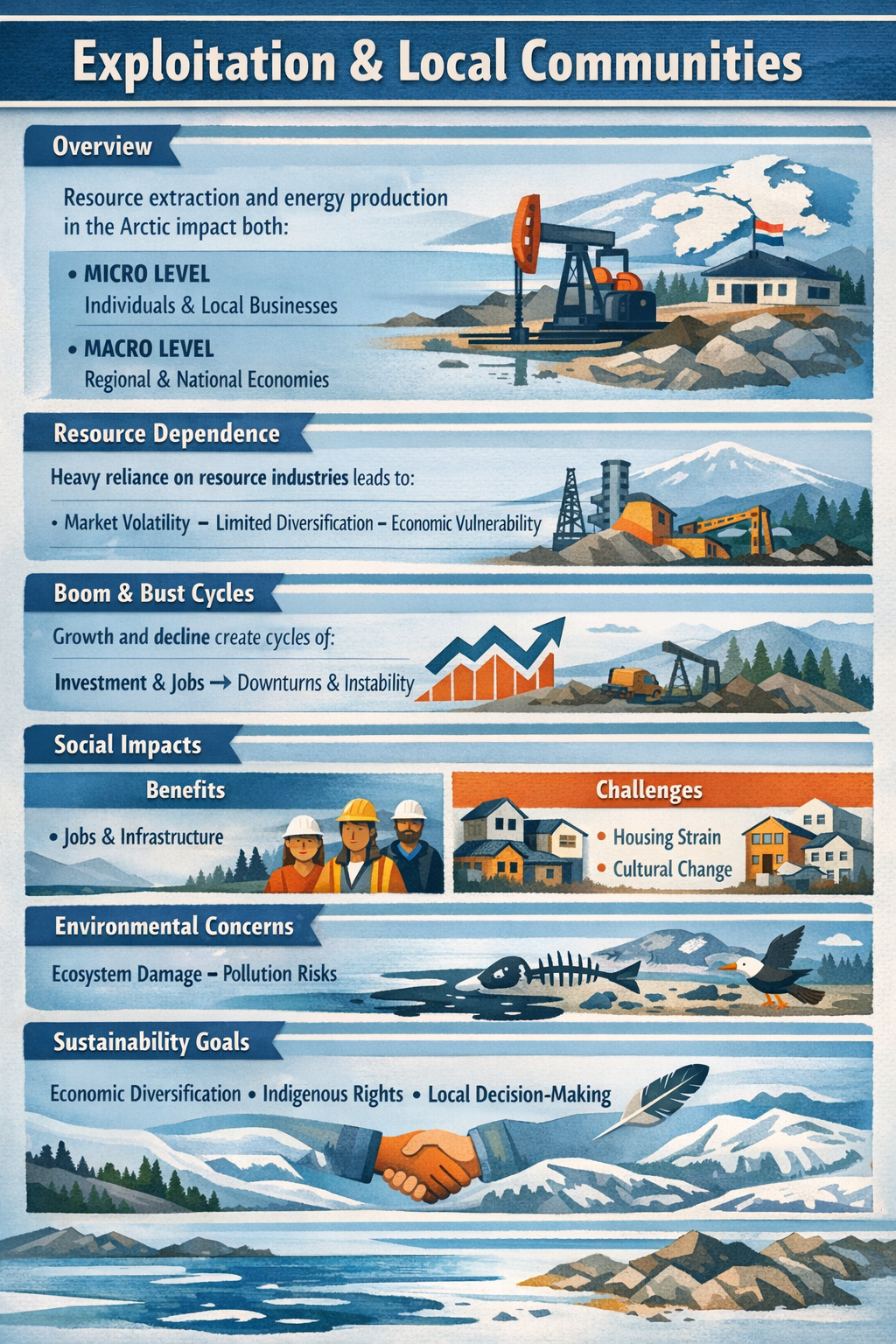 The extraction of natural resources and the production, use, and transportation of energy in the Arctic have wide-ranging impacts. These effects occur at both:
- Micro level – influencing individuals, households, and local businesses
- Macro level – shaping regional and national economies
Understanding these multi-level impacts is essential for evaluating Arctic development.
Resource Dependence
The expansion of resource-intensive industries—such as oil, gas, mining, and large-scale energy projects—has led many Arctic communities to become highly dependent on a limited number of economic activities.
This dependence often results in:
- Strong ties to global commodity markets
- Limited economic diversification
- Vulnerability to external economic shocks
Boom–Bust Dynamics
Because Arctic industries are closely linked to global demand, communities are often affected by boom and bust cycles:
- Periods of high demand bring investment, employment, and infrastructure development
- Downturns can lead to job losses, outmigration, and economic instability
These cycles can have lasting social and economic consequences for local populations.
Social and Community Impacts
Resource development can significantly affect local communities:
Potential benefits:
- Employment opportunities
- Improved infrastructure and services
- Increased regional investment
Challenges:
- Rapid population changes and social pressures
- Strain on housing and local services
- Changes to traditional ways of life, particularly for Indigenous communities
Environmental Considerations
Industrial activities in the Arctic can also have environmental impacts that directly affect communities:
- Disturbance of ecosystems and wildlife
- Pollution risks and land degradation
- Long recovery times due to fragile Arctic environments
These environmental changes can in turn affect livelihoods such as fishing, hunting, and reindeer herding.
Sustainability and Future Development
There is growing recognition of the need to balance economic development with social and environmental sustainability. Key priorities include:
- Promoting economic diversification
- Strengthening local participation and decision-making
- Supporting Indigenous rights and knowledge systems
- Ensuring responsible and sustainable resource management
Purpose of This Section
This section provides an overview of the socioeconomic and environmental impacts of resource development on Arctic communities. It highlights how global processes interact with local realities across the circumpolar North.