Biomass
 What is Biomass Energy?
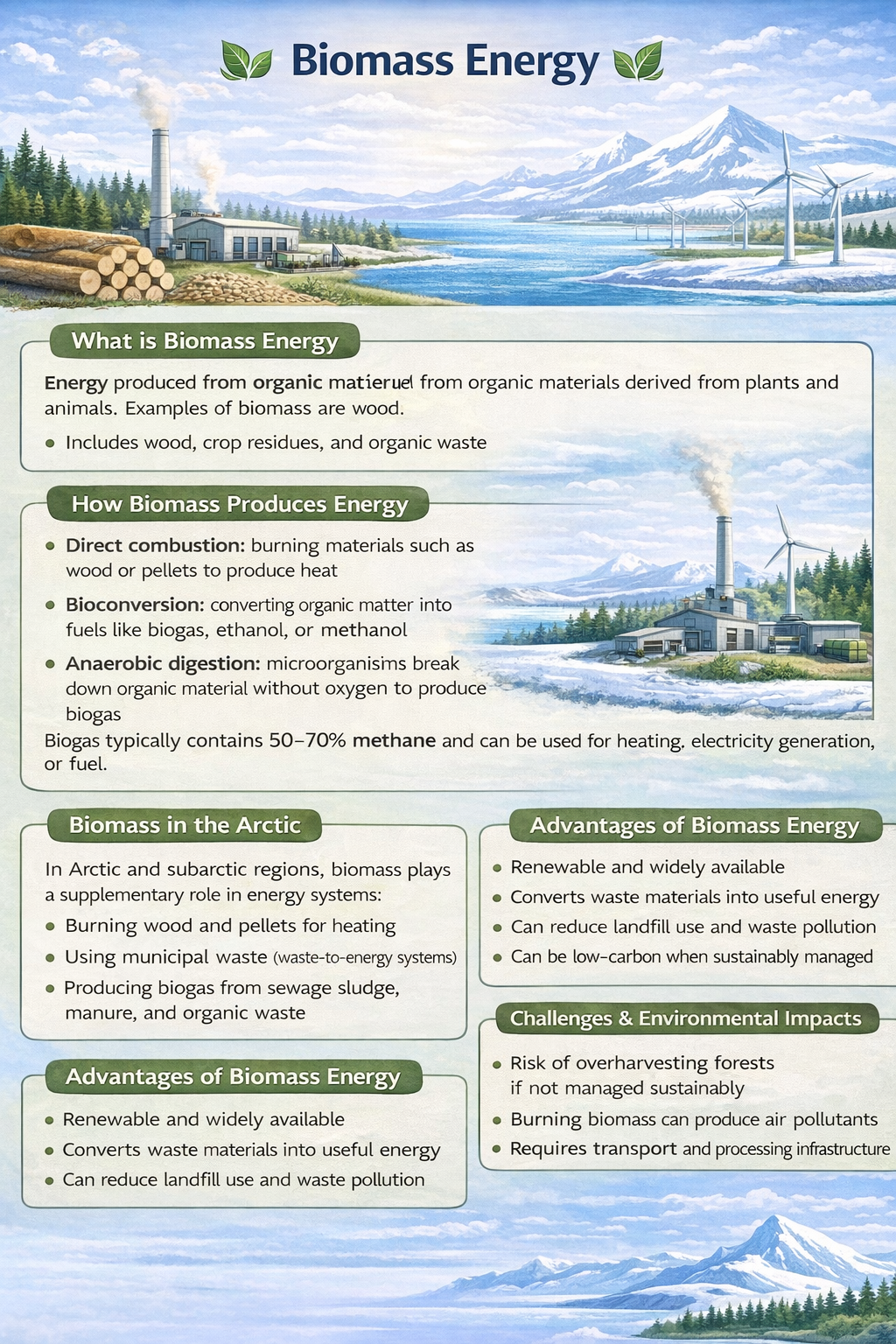
Biomass energy refers to energy produced from organic materials derived from plants and animals. These materials store energy from the sun through photosynthesis and can be used as a renewable energy source. Common examples include wood, agricultural residues, and organic waste.
How Biomass Produces Energy
Biomass can be used in several ways to generate energy:
- Direct combustion: burning materials such as wood or pellets to produce heat
- Bioconversion: converting organic matter into fuels like biogas, ethanol, or methanol
- Anaerobic digestion: microorganisms break down organic material without oxygen to produce biogas
Biogas typically contains 50–70% methane and can be used for heating, electricity generation, or fuel.
Biomass in the Arctic
In Arctic and subarctic regions, biomass plays a supplementary role in energy systems. Common uses include:
- Burning wood and pellets for heating
- Using municipal waste (waste-to-energy systems)
- Producing biogas from sewage sludge, manure, and organic waste
Biomass is especially useful in remote communities where other energy sources may be limited.
Advantages of Biomass Energy
- Renewable and widely available
- Converts waste materials into useful energy
- Can reduce landfill use and waste pollution
- Can be low-carbon when sustainably managed
Challenges and Environmental Impacts
- Risk of overharvesting forests if not managed sustainably
- Burning biomass can produce air pollutants
- Requires transport and processing infrastructure
- Carbon neutrality depends on sustainable sourcing and regrowth
Modern approaches focus on improving efficiency and sustainability in biomass production and use.
Current Developments and Future Potential
Biomass energy is increasingly integrated into circular economy systems, where waste is reused as a resource. Advances include:
- Improved waste-to-energy technologies
- More efficient biogas production systems
- Integration with other renewable energy systems
While biomass is unlikely to replace major energy sources, it remains an important supplementary and locally valuable energy option, particularly in rural and Arctic regions.