

Formation of oil
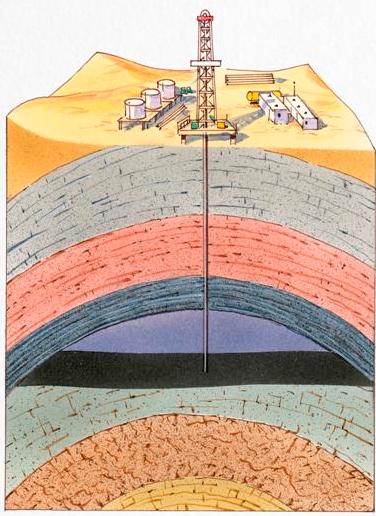
What are hydrocarbons?
Oil, often referred to as hydrocarbons, consists of organic compounds made up of hydrogen and carbon. These compounds occur naturally in the Earth’s subsurface, typically in liquid form as crude oil (petroleum) or as natural gas.
Petroleum and natural gas are classified as fossil fuels because they originate from ancient organic material that has been transformed over millions of years.
From organic matter to fossil fuels
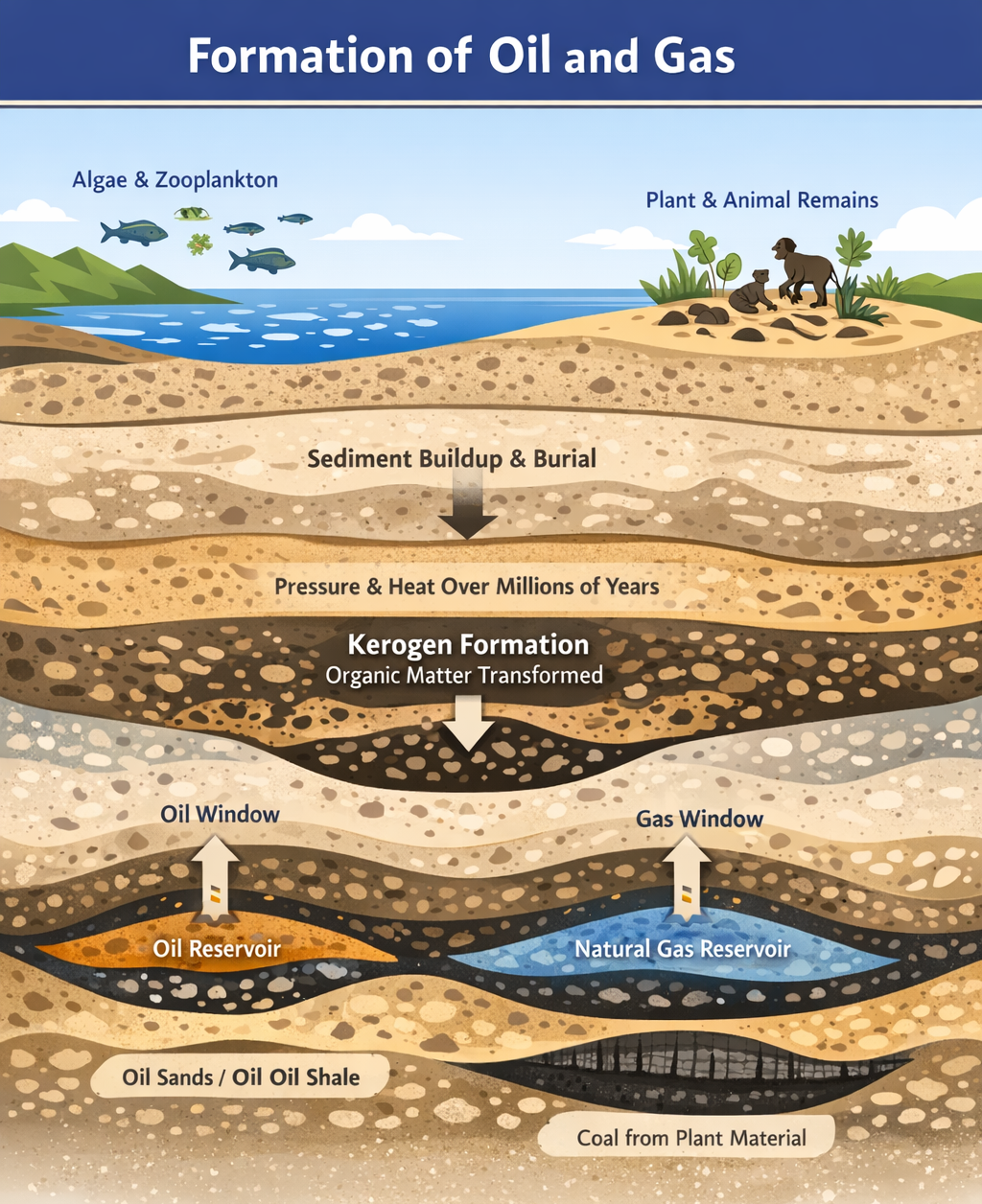
Oil and gas are formed from the remains of microscopic organisms such as algae and zooplankton, along with plant and animal material that accumulated on the bottoms of ancient seas and lakes.
Over time, this organic material became buried under layers of sediment such as mud and clay. In these oxygen-poor (anoxic) environments, decomposition slowed, allowing the material to be preserved. As more sediment accumulated, increasing pressure and temperature triggered a series of complex biochemical and geological processes.
 The role of heat and pressure
As burial depth increased, the organic material was gradually transformed into a waxy substance known as kerogen. With further heating over geological time, kerogen broke down into liquid and gaseous hydrocarbons, forming crude oil and natural gas.
This transformation typically occurs over millions of years, within specific temperature ranges often referred to as the “oil window” and “gas window.”
Migration and accumulation
Once formed, hydrocarbons can migrate through porous rocks and may accumulate in underground reservoirs. These reservoirs are often sealed by impermeable rock layers, trapping oil and gas in structures such as domes or folds.
In some cases, hydrocarbons remain trapped within the source rock itself, forming oil shale, or accumulate in oil sands, such as those found in the Athabasca region of Canada.
Different fossil fuel origins
While oil and natural gas primarily originate from marine organisms, fossil fuels can also form from land-based material. For example, coal is largely derived from ancient terrestrial plants that accumulated in swamp environments.
Today’s Understanding
Modern research has refined our understanding of these processes, using geochemical analysis and advanced imaging to better understand how hydrocarbons form, migrate, and accumulate. This knowledge is essential for energy exploration, but also for assessing environmental impacts and supporting the global transition toward more sustainable energy systems.
Sources: Petrolium Online, Britannica, U.S. Energy Information Administration