Social and Environmental Impacts of Resource Development
 Across the Arctic, economic development has historically been driven by large-scale extraction of natural resources, particularly non-renewable resources such as minerals, oil, and gas.
These activities have significant social, economic, and environmental impacts, both at the regional level and within local communities.
Economic Structure and Global Markets
Resource extraction in the Arctic is typically capital-intensive, requiring large investments, advanced technology, and specialised expertise. As a result, projects are often led by multinational corporations or state-owned enterprises, rather than local businesses.
Much of the production is intended for global markets, meaning that Arctic economies are closely linked to international demand and investment patterns. While these activities can generate substantial revenue, a significant share of profits often leaves the region.
Boom and Bust Dynamics
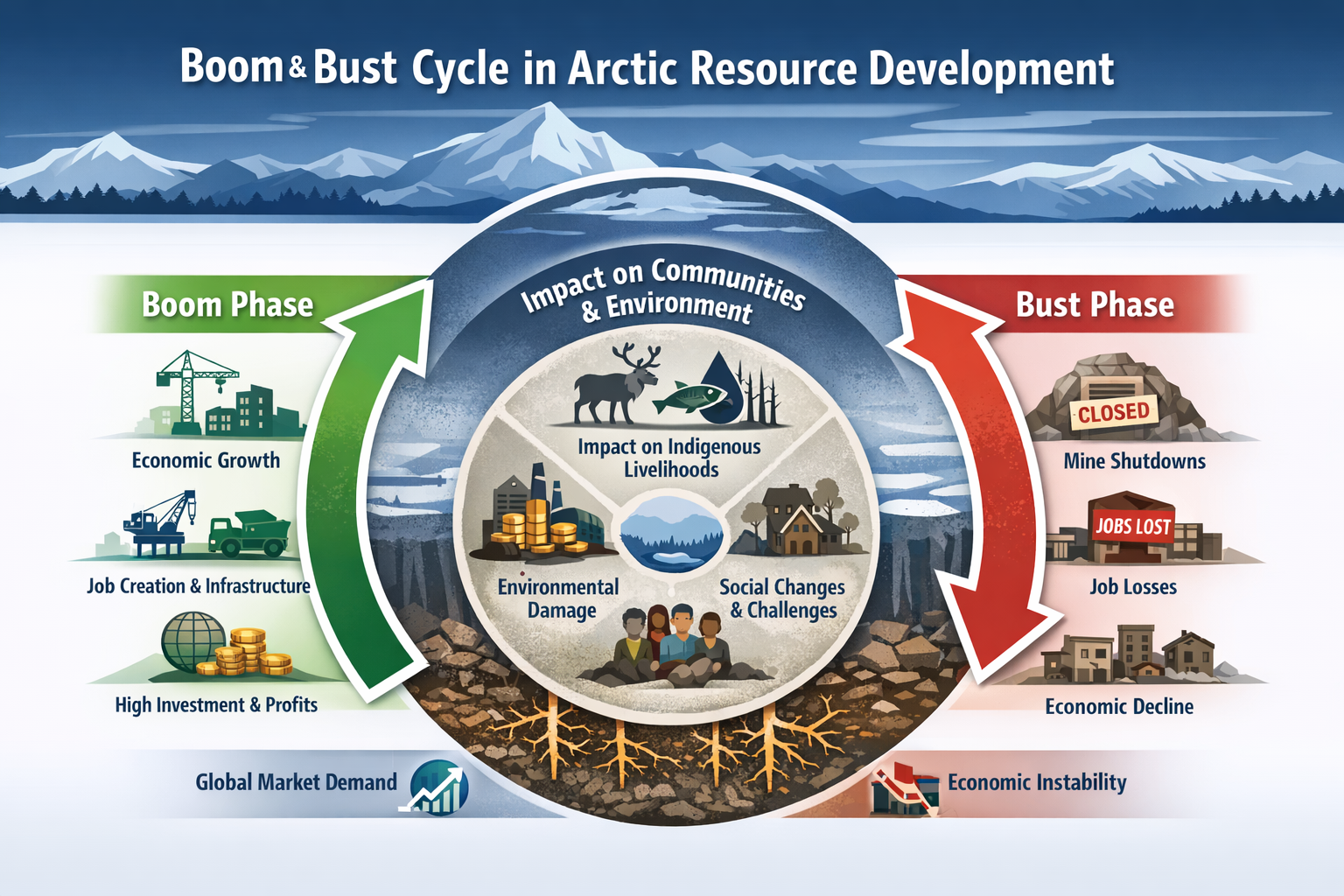
Arctic resource economies are strongly influenced by global commodity cycles. Periods of high demand and investment can lead to rapid development, infrastructure expansion, and employment opportunities.
However, downturns in global markets can result in project closures, job losses, and economic instability in local communities. This “boom and bust” pattern remains a key challenge for long-term regional development.
Environmental Impacts
Large-scale extraction can have lasting environmental effects, particularly in the Arctic’s fragile ecosystems. These impacts may include:
- Landscape disturbance and habitat loss
- Pollution of soil and water systems
- Long recovery times due to cold climates
In many cases, environmental damage can persist for decades, making responsible management and monitoring essential.
Impacts on Communities and Indigenous Peoples
Resource development also affects local and Indigenous communities, particularly in relation to land use, livelihoods, and cultural practices.
Traditional activities such as reindeer herding, fishing, and hunting depend on healthy ecosystems and access to land. As a result, there is increasing emphasis on:
- consultation and participation
- benefit-sharing agreements
- respect for Indigenous rights and knowledge systems
Sustainability and Economic Diversification
Because mineral and fossil fuel resources are finite, there is growing recognition of the need to diversify Arctic economies.
This includes investing in:
- infrastructure and local services
- education and skills development
- renewable energy and new industries
Strengthening local capacity and knowledge-based sectors is increasingly seen as essential for long-term sustainability.
Looking Ahead
The future of Arctic development depends on balancing economic opportunities with environmental protection and social responsibility.
Efforts to promote sustainable development focus on ensuring that resource extraction contributes to long-term benefits for Arctic communities, while minimising environmental impacts and supporting economic resilience.
Sources: Arctic Human Development Report I, Arctic Human Development Report II, Nordic Council of Ministers,