
Electricity in the Arctic
 What is Electricity?
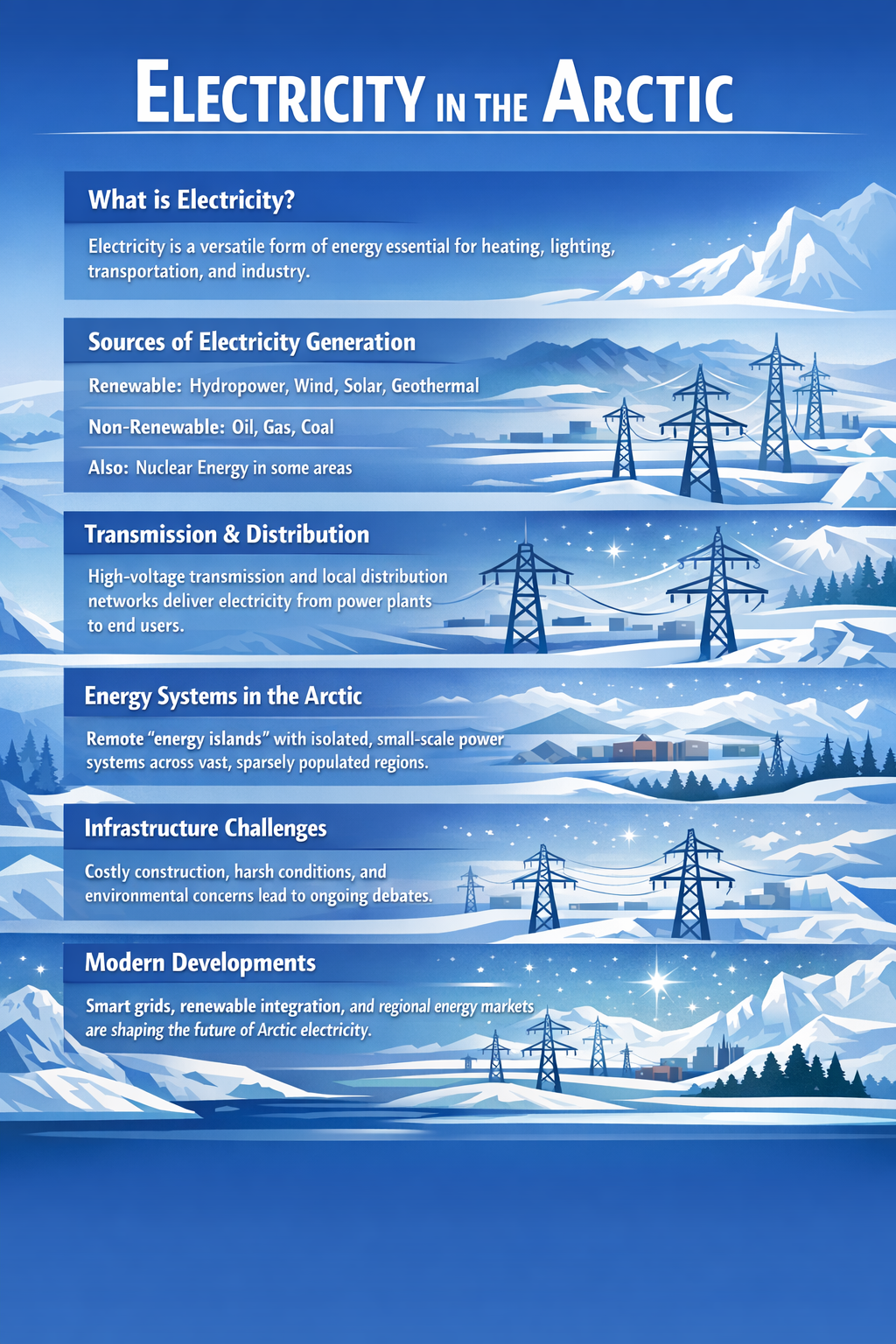
Electricity is one of the most versatile forms of energy and is essential for modern life. It can be used for heating, lighting, transportation, and powering machinery. Reliable access to electricity is a key factor in economic development, infrastructure, and quality of life.
Sources of Electricity Generation
Electricity in the Arctic is generated from a mix of energy sources:
- Renewable sources: hydropower, wind, solar, and geothermal energy
- Non-renewable sources: oil, gas, and coal (especially in remote areas)
- Other sources: in some regions, nuclear energy contributes to electricity supply
There is a growing shift toward renewable energy as part of climate and sustainability goals.
Electricity Transmission and Distribution
Electricity must be transported from where it is generated to where it is used. This involves two key systems:
- Transmission: high-voltage transport of electricity over long distances via power lines or subsea cables
- Distribution: delivery of electricity from substations to homes, businesses, and industries
Transmission networks connect multiple regions and form large-scale electricity systems.
Energy Systems in the Arctic
The Arctic presents unique challenges for electricity systems:
- Sparse populations and vast distances
- Remote and isolated communities
- Limited infrastructure and difficult terrain
As a result, many Arctic communities operate as “energy islands”, relying on local, small-scale power generation rather than large interconnected grids.
Infrastructure Challenges and Debates
Building electricity infrastructure in the Arctic is complex and often controversial:
- High costs of constructing and maintaining power lines
- Environmental and landscape impacts
- Public opposition to large infrastructure projects
Examples such as debates over transmission lines in Norway highlight the tension between development and environmental protection.
Modern Developments and Smart Grids
Recent developments are transforming electricity systems in the Arctic:
- Smart grids improve efficiency by balancing supply and demand in real time
- Integrated energy markets allow electricity to be traded across regions
- Increased use of renewable energy and hybrid systems
These developments help reduce energy waste, improve reliability, and support sustainable energy use.
Future Outlook
The future of electricity in the Arctic will likely involve:
- Greater integration of renewable energy sources
- Expansion of decentralized and community-based energy systems
- Improved storage technologies
- Continued development of regional and international electricity networks
Balancing infrastructure development with environmental protection and social acceptance will remain a key challenge.
Sources: Nordic Council of Ministers, GENI