Nuclear Energy
 What is Nuclear Energy?
Nuclear energy is produced through the process of nuclear fission, where atoms (usually uranium) are split to release heat. This heat is used to generate steam, which drives turbines to produce electricity. Nuclear power is a major source of low-carbon energy worldwide.
Nuclear Energy in the Arctic
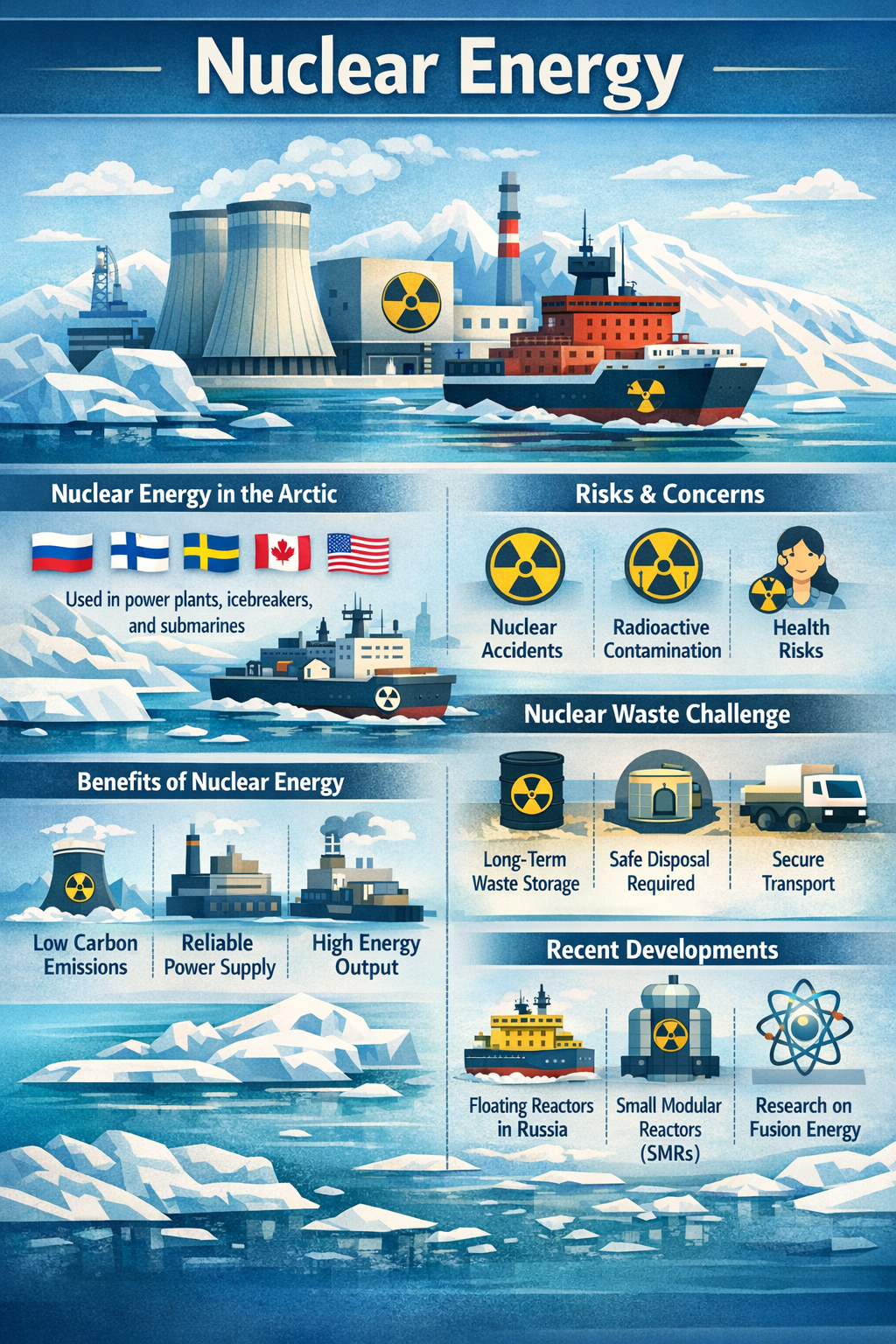
Nuclear energy plays a role in several Arctic and near-Arctic regions. Nuclear power plants operate in countries such as:
- Russia
- Finland
- Sweden
- Canada (historically and regionally relevant)
- The United States (including Alaska’s proximity to nuclear-powered systems)
In addition to land-based plants, nuclear energy is widely used to power icebreakers, submarines, and other specialized vessels, particularly in Russia, where nuclear-powered icebreakers are essential for Arctic navigation.
Advantages of Nuclear Energy
- Produces large amounts of electricity with very low greenhouse gas emissions
- Reliable and constant energy supply (not dependent on weather conditions)
- Supports energy security and large-scale industrial demand
Because of these characteristics, nuclear energy is often considered an important part of the transition to low-carbon energy systems.
Risks and Environmental Concerns
Despite its benefits, nuclear energy remains controversial due to several risks:
- Potential for serious accidents, as seen in Three Mile Island (USA), Chernobyl (Ukraine), and Fukushima (Japan)
- Long-term environmental contamination in the event of failure
- Health risks associated with radiation exposure
The effects of past nuclear incidents, particularly Chernobyl, have been observed even in Arctic regions through environmental contamination.
Nuclear Waste and Safety Challenges
One of the most significant challenges of nuclear energy is the management of radioactive waste:
- Waste must be stored safely for thousands of years
- Long-term storage solutions, such as deep geological repositories, are still being developed
- Transportation and handling of nuclear materials require strict safety measures
Some countries are exploring reprocessing technologies to reuse nuclear fuel, but this remains complex and costly.
Current Developments in the Arctic
Recent developments are shaping the role of nuclear energy in the Arctic:
- Russia has deployed floating nuclear power plants (e.g. Akademik Lomonosov) to supply energy to remote Arctic regions
- Finland is advancing new nuclear projects with high safety standards and is developing one of the world’s first permanent nuclear waste repositories
- Interest in small modular reactors (SMRs) is growing, as they may provide flexible and safer energy solutions for remote communities
Future Potential
Looking ahead, nuclear energy may evolve significantly:
- Development of small modular reactors (SMRs) for remote and Arctic use
- Advances in reactor safety and efficiency
- Ongoing research into nuclear fusion, which could provide nearly limitless energy with minimal waste
While fusion is not yet commercially viable, it represents a potential long-term solution to global energy demand.