
Smart Grids
 What are Smart Grids?
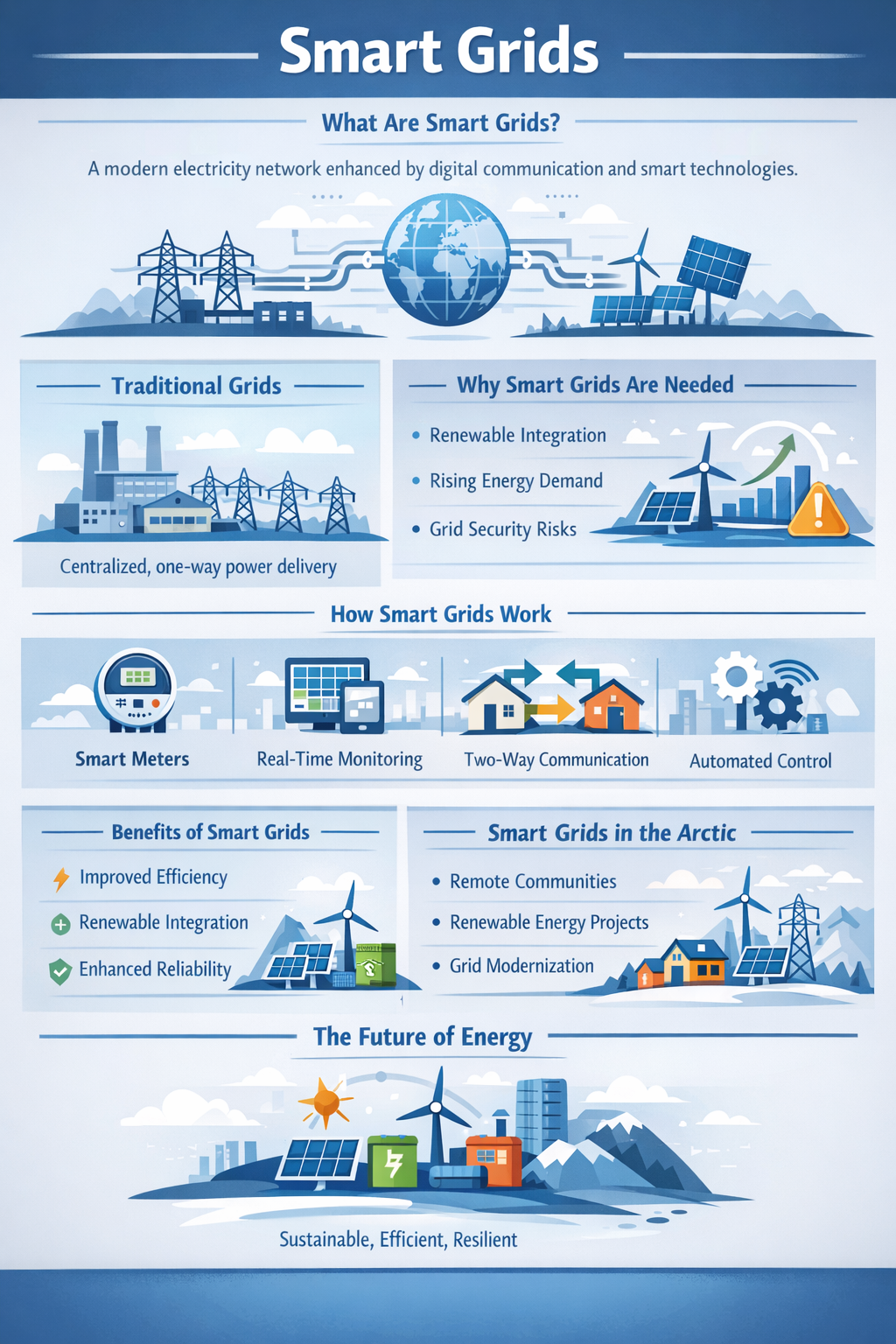
Modern societies rely on two critical networks: digital communication systems (such as the internet) and electricity networks (power grids). A smart grid combines these two by integrating digital technology, communication systems, and data into the electricity grid to improve how energy is produced, distributed, and consumed.
Traditional Power Grids
Most existing power grids were developed in the late 19th and 20th centuries. They were designed as centralized systems where electricity is generated at large power plants and transmitted to consumers.
Key characteristics of traditional grids:
- Centralized power generation
- One-way flow of electricity (from producer to consumer)
- Limited flexibility and real-time control
As demand increased, these grids expanded and became more complex, but their basic structure remained largely unchanged.
Why Smart Grids are Needed
Traditional grids face several modern challenges:
- Increasing integration of renewable energy sources, which are variable and decentralized
- Growing electricity demand and peak usage periods
- Need for higher efficiency and reduced energy waste
- Cybersecurity risks and infrastructure vulnerabilities
- Demand for more reliable and resilient energy systems
These challenges require more advanced and flexible grid systems.
How Smart Grids Work
Smart grids use digital technologies to monitor and manage electricity in real time. They rely on:
- Smart meters that track energy use and communicate data
- Sensors and automated systems across the grid
- Communication networks linking producers and consumers
- Data analysis to balance supply and demand
Unlike traditional grids, smart grids enable two-way communication, allowing both energy providers and users to respond dynamically to changes in demand.
Benefits of Smart Grids
Smart grids offer several advantages:
- Improved efficiency and reduced energy losses
- Better integration of renewable energy sources
- Increased reliability and faster response to outages
- More informed energy consumption by users
- Support for flexible pricing and electricity markets
They also enable the development of decentralized energy systems, where communities can generate and manage their own energy.
Smart Grids in the Arctic
Smart grid development is particularly important in the Arctic, where energy systems are often isolated and infrastructure is limited.
Key developments include:
- Introduction of smart metering systems in Nordic countries
- Regional electricity market integration in Norway, Sweden, and Finland
- Large-scale modernization projects such as Hydro One in Ontario (Canada)
Smart grids can help Arctic communities reduce reliance on fossil fuels, improve energy efficiency, and better integrate renewable energy sources.
Future Potential
Smart grids are expected to play a central role in the future of energy systems by:
- Enabling large-scale renewable energy integration
- Supporting energy storage and hybrid systems
- Facilitating real-time energy trading and flexible pricing
- Improving resilience to climate and infrastructure challenges
They are a key component in the transition toward more sustainable, efficient, and decentralized energy systems.