Hydraulic Fracturing (Fracking): Technology and Environmental Considerations
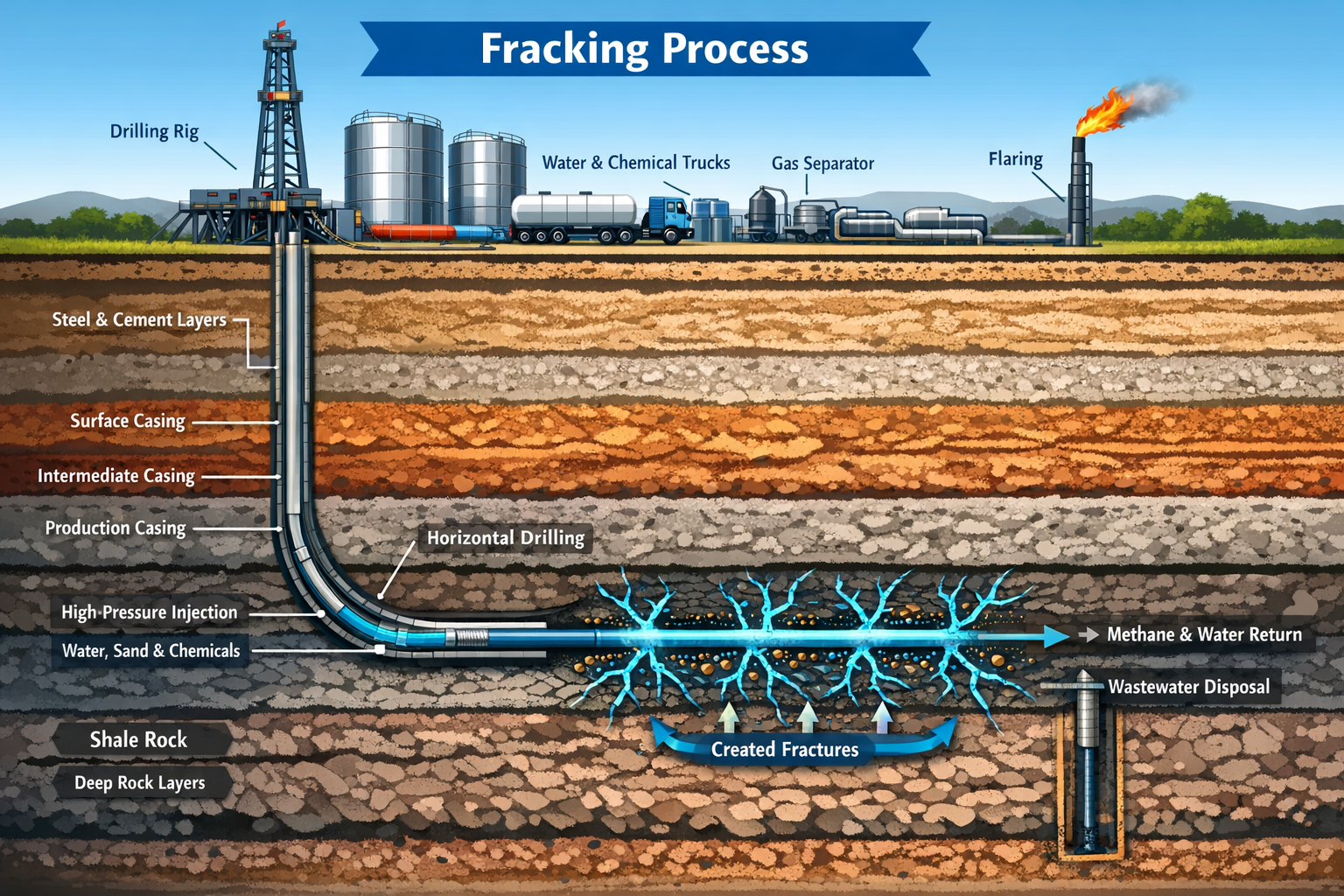 Hydraulic fracturing, commonly known as fracking, is a technique used to extract natural gas and oil from unconventional reservoirs, particularly shale formations. The process involves injecting a mixture of water, sand, and chemicals at high pressure into rock formations to create fractures, allowing hydrocarbons to flow more freely.
Combined with horizontal drilling, fracking has significantly increased access to previously inaccessible energy resources, particularly in North America.
Development and Use
Although hydraulic fracturing has been used since the mid-20th century, its large-scale application expanded rapidly in the early 2000s with advances in horizontal drilling and improved well technologies.
This combination enabled the development of major shale gas and oil fields, contributing to increased domestic energy production in several countries, particularly the United States.
Today, fracking is used in various regions worldwide, although its adoption varies depending on geology, regulation, and public acceptance.
Environmental and Safety Concerns
Fracking has raised a number of environmental and societal concerns, particularly related to:
- Groundwater contamination risks, if well integrity is compromised
- Methane leakage, which contributes to greenhouse gas emissions
- Water use, as large volumes are required for each well
- Wastewater management, including disposal of flowback fluids
- Induced seismicity, linked in some cases to wastewater injection
While many of these risks can be mitigated through proper design, monitoring, and regulation, they remain central to ongoing debates about the technology.
Regulation and Best Practices
In recent years, regulatory frameworks and industry practices have evolved to improve safety and environmental performance. Key measures include:
- Improved well construction, with multiple layers of steel casing and cement
- Monitoring of methane emissions and leak detection systems
- Restrictions on chemical use and disclosure requirements
- Advanced wastewater treatment and disposal methods
- Seismic monitoring in areas of active development
Regulation varies by country and region, with some areas imposing strict controls or bans on fracking, while others continue to develop the technology under regulated conditions.
Fracking in the Context of Energy Transition
Natural gas produced through fracking is often described as a transition fuel, as it produces fewer carbon emissions than coal when burned for energy. However, concerns about methane emissions and long-term climate impacts remain.
As global energy systems shift toward low-carbon and renewable sources, the role of fracking is increasingly debated. Some regions continue to rely on it for energy security, while others are moving away from unconventional fossil fuel development.
Looking Ahead
The future of hydraulic fracturing will depend on a combination of technological innovation, environmental regulation, market demand, and climate policy.
Efforts to improve safety, reduce emissions, and manage environmental impacts will be critical in determining whether and how fracking continues to play a role in global energy systems.
Source: U.S. Energy Information Administration (EIA), International Energy Agency (IEA)