Megaprojects in the Arctic
 Changing Arctic Context
In recent decades, the Arctic has gained global attention primarily due to climate change and its environmental impacts. However, the region is also undergoing significant socioeconomic transformation. Arctic communities are shaped not only by environmental change but also by globalization, shifting markets, and evolving geopolitical interests.
Drivers of Megaproject Development
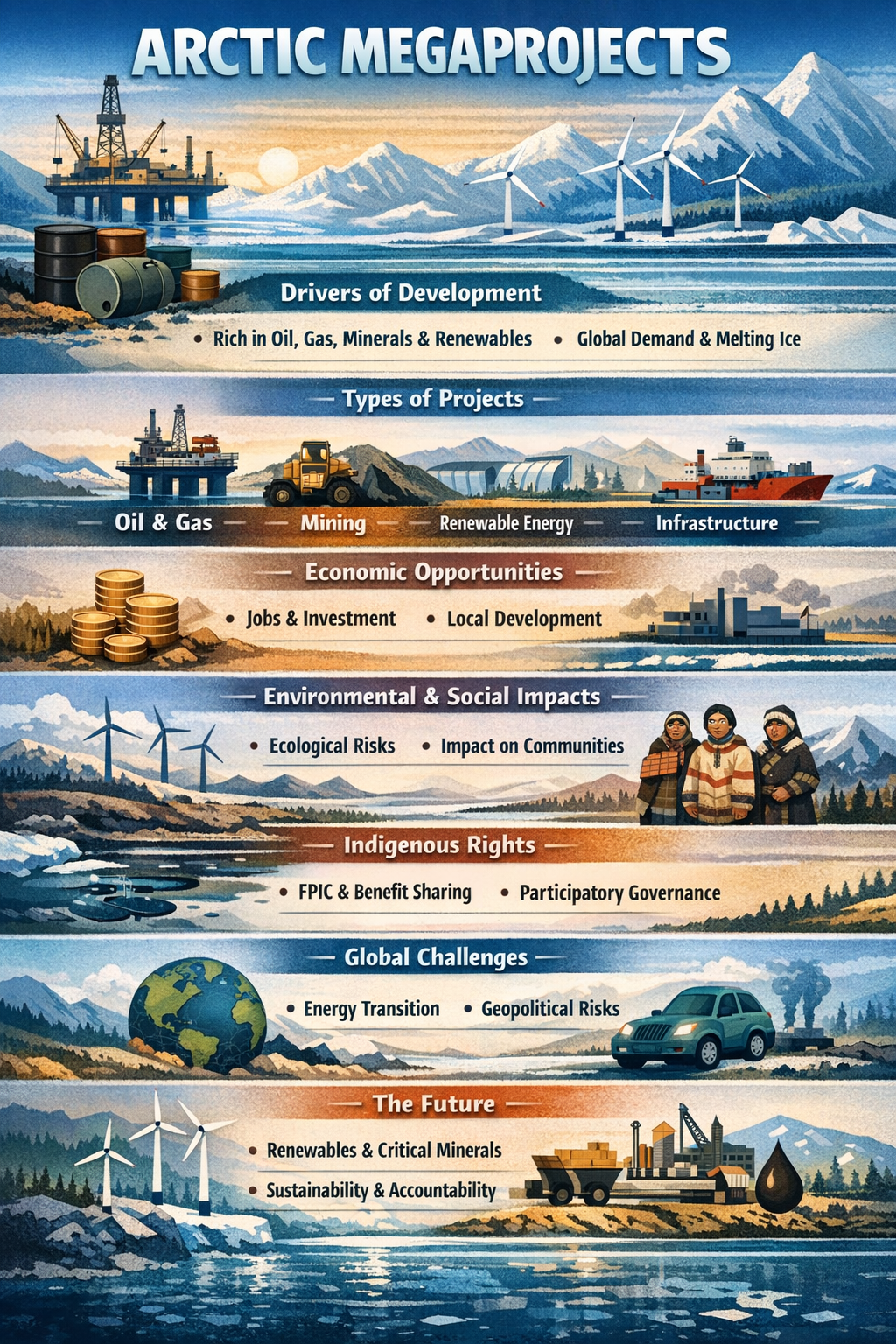
The Arctic is rich in both non-renewable resources (such as oil, gas, and minerals) and renewable energy potential (including hydropower, wind, and geothermal energy). Advances in technology, combined with changing ice conditions and increasing global demand for resources, have made large-scale development projects more feasible.
As a result, the Arctic has seen a rise in megaprojects, large-scale industrial, energy, and infrastructure developments with significant economic and environmental footprints.
Types of Arctic Megaprojects
Megaprojects in the Arctic typically include:
- Oil and gas extraction projects
- Mining operations (including critical minerals)
- Hydropower and renewable energy developments
- Large infrastructure projects (ports, pipelines, transport corridors)
These projects are often led by multinational corporations, state-owned enterprises, or public-private partnerships.
Economic Opportunities
Megaprojects can bring important economic benefits to Arctic regions:
- Job creation and local employment
- Infrastructure development (roads, ports, energy systems)
- Increased government revenues and investment
- Opportunities for regional economic growth
In some cases, they have contributed to improved living standards in remote communities.
Social and Environmental Impacts
Despite potential benefits, megaprojects are often controversial due to their impacts:
- Disturbance of fragile Arctic ecosystems
- Risk of pollution and long-term environmental damage
- Disruption of traditional livelihoods, particularly for Indigenous communities
- Social changes linked to rapid economic development
These impacts have led to increasing scrutiny and, in some cases, strong local and international opposition.
Governance and Indigenous Rights
Today, there is growing recognition of the importance of:
- Indigenous rights and participation in decision-making
- Free, Prior and Informed Consent (FPIC)
- Social and environmental impact assessments
- Benefit-sharing agreements with local communities
Modern megaprojects are increasingly expected to meet higher standards of sustainability and accountability.
Global Trends and Uncertainty
The future of Arctic megaprojects is influenced by several global factors:
- Energy transition and declining long-term demand for fossil fuels
- Rising demand for critical minerals needed for clean technologies
- Geopolitical tensions and investment risks
- Climate change is altering accessibility and environmental conditions
These dynamics create both opportunities and uncertainties for future development.
Future Outlook
Arctic megaprojects are likely to continue, but with changing priorities:
- Greater focus on renewable energy and critical minerals
- Stronger environmental regulations
- Increased involvement of local and Indigenous stakeholders
- More cautious and selective investment
Balancing economic development with environmental protection and social responsibility will remain a key challenge in the Arctic.
Sources: IIEA, Economies of the North