Hydro Projects
 Hydroelectric Power Generation
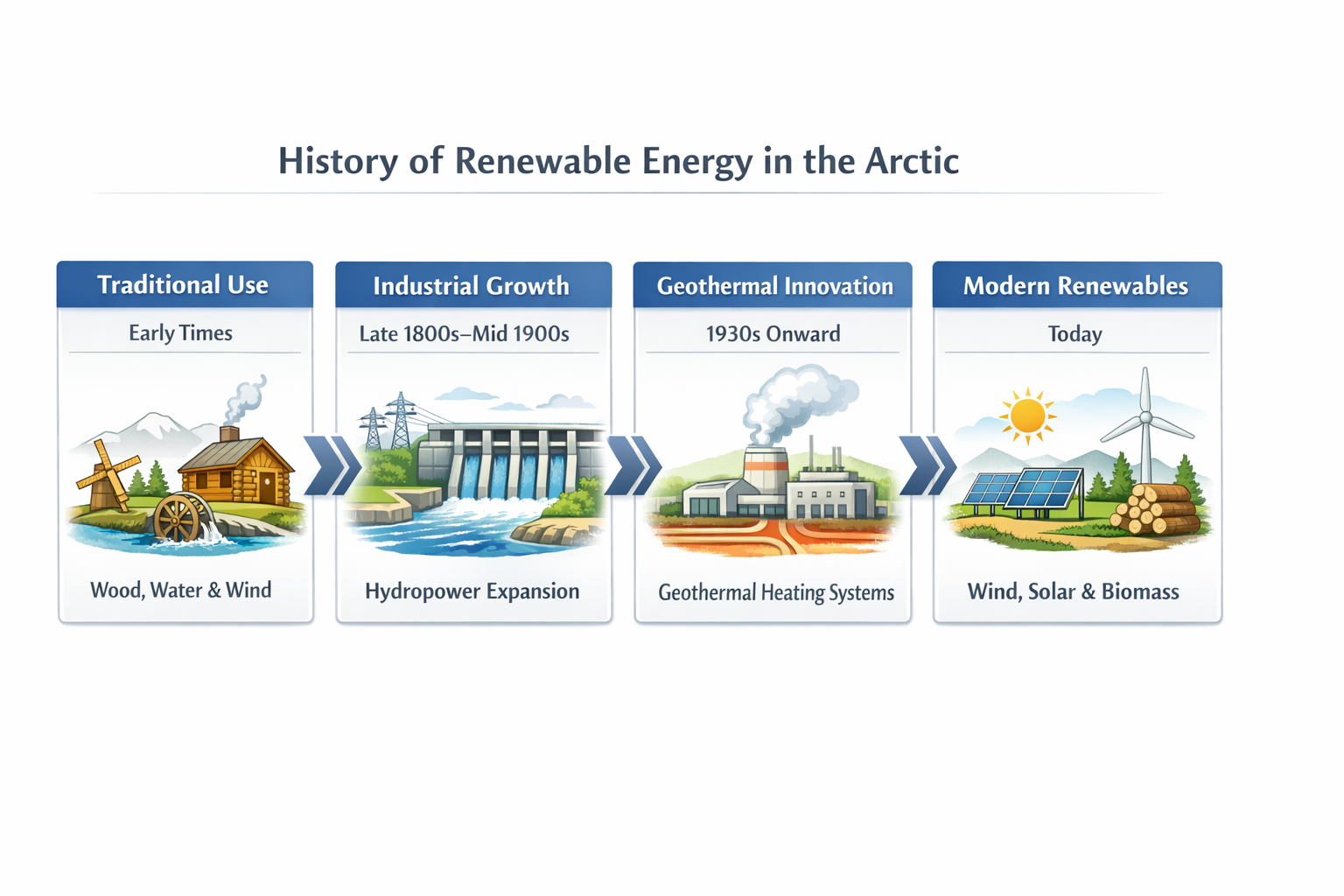
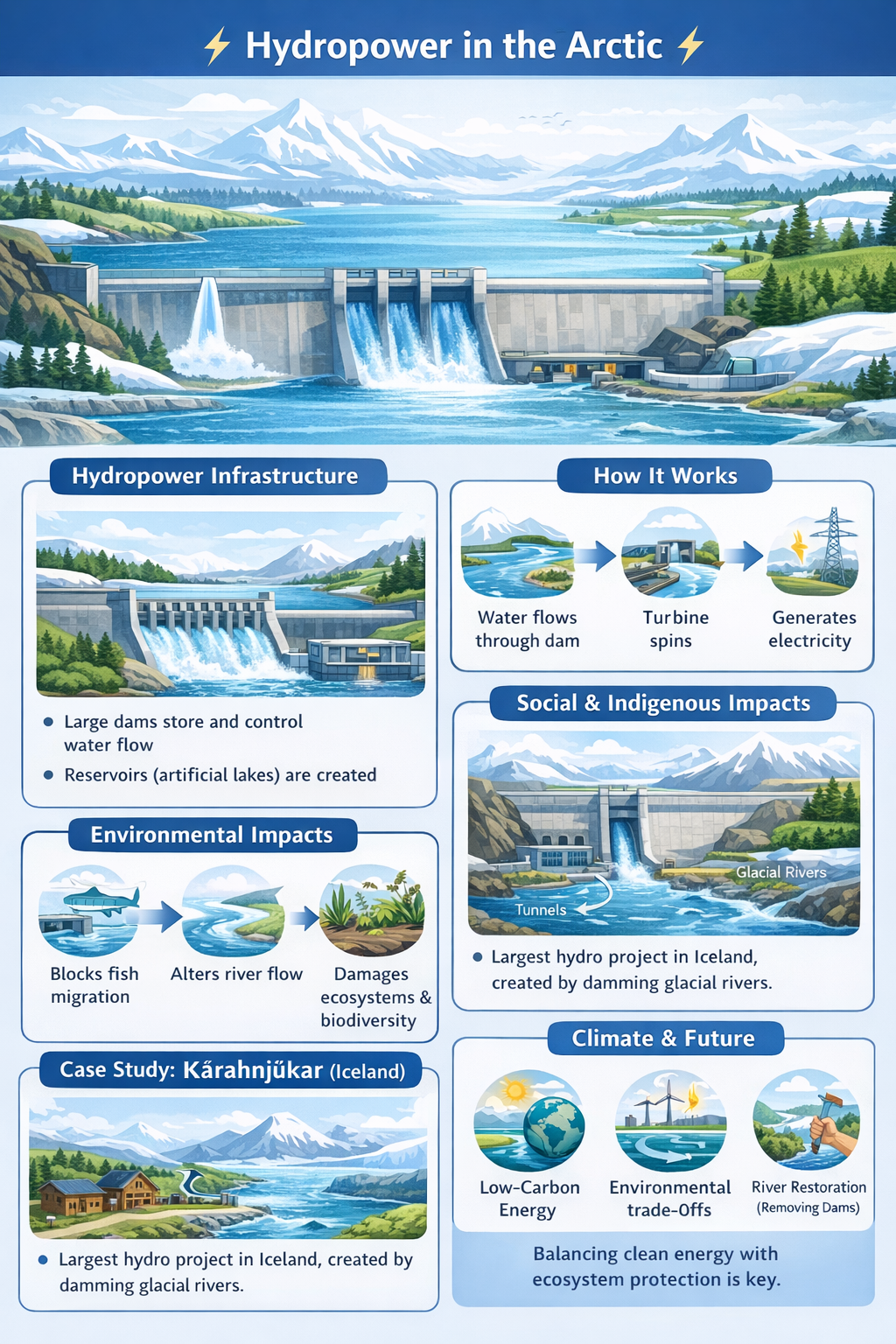
Hydroelectricity is generated by capturing the energy of fast-flowing water and using it to drive turbines that produce electricity. Hydropower is one of the world’s largest sources of renewable energy and plays an important role in reducing reliance on fossil fuels. Most hydroelectric power stations require rivers to be dammed or diverted to harness water at its highest energy potential.
Circumpolar Megaprojects and International Cooperation
Large-scale hydropower megaprojects in circumpolar regions have been developed particularly in Norway, Labrador (Canada), and Iceland. Some projects involve cross-national cooperation; for example, the joint agreement between Norway, Russia (formerly the Soviet Union), and Finland on the development of the Pasvik River demonstrates how shared water resources can be managed collaboratively.
Environmental Impacts of Hydropower
Hydroelectric dams significantly alter river systems and surrounding ecosystems. They disrupt natural water flow, sediment transport, and fish migration routes, often leading to declining biodiversity. Today, these impacts are understood not only in terms of individual species, such as fish stocks, but also in terms of entire river ecosystems and their long-term ecological health.
Socioeconomic and Indigenous Impacts
The impacts of hydropower are most strongly felt at the local level, particularly by Indigenous and rural communities. Projects such as the Alta–Kautokeino development in Norway and the La Grande project in James Bay, Canada, demonstrate how the use of traditionally inhabited land has led to major protests and long-lasting political, cultural, and economic consequences. These cases are now often discussed in terms of environmental justice and Indigenous rights.
Case Study: Kárahnjúkar Project
The Kárahnjúkar project in Iceland, which involved the construction of large dams and reservoirs, had significant environmental consequences, including landscape transformation and habitat disruption. It also sparked widespread public debate and protest, reflecting growing societal concern about large-scale infrastructure projects and their long-term impacts.
Changing Approaches: Sustainability and Mitigation
In recent years, hydropower development has increasingly incorporated environmental and social considerations. Measures such as fish passages, improved water flow management, and ecosystem-based planning aim to reduce negative impacts. Comprehensive environmental and socioeconomic impact assessments, especially those involving Indigenous and local communities, are now widely recognized as essential for responsible project planning.
Emerging Trends: Climate and River Restoration
Hydropower is now also viewed within the broader context of climate change. While it provides low-carbon energy, its environmental trade-offs are increasingly debated. In some regions, older dams are being removed to restore river ecosystems and improve biodiversity, reflecting a shift toward more sustainable and balanced water management strategies.
Sources: IIEA, Landsvirkjun,