Renewable Energy in the Arctic
 The Arctic has significant potential for renewable energy development, and many regions already have long experience using renewable resources such as hydropower and geothermal energy.
Today, renewable energy is increasingly seen as a key component of Arctic development, supporting both energy security and economic diversification, particularly in remote and off-grid communities.
Key Renewable Energy Sources
Several renewable energy technologies are relevant in the Arctic:
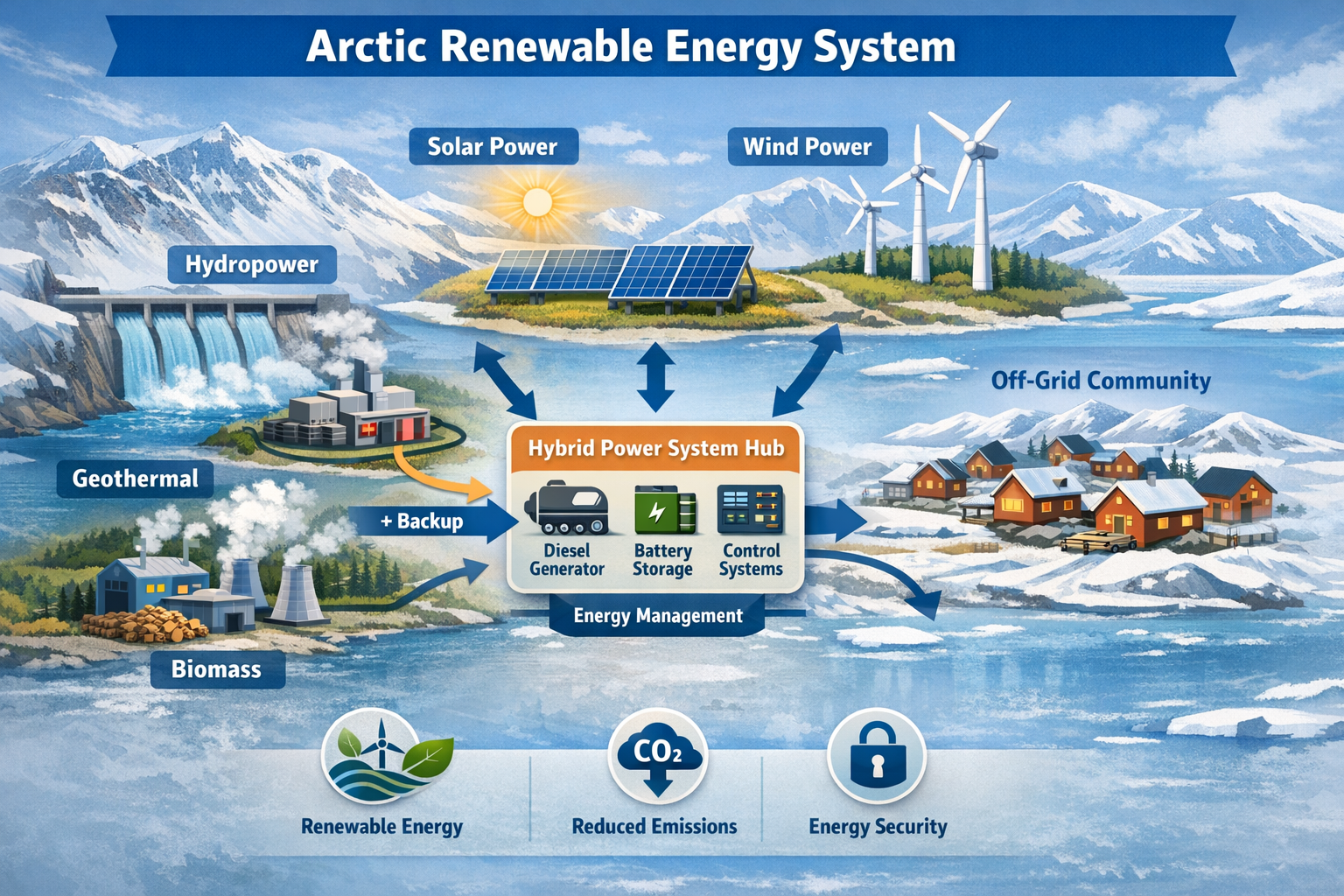
- Hydropower, widely used in Nordic countries and parts of Canada
- Wind energy, particularly in coastal and open tundra regions
- Geothermal energy, especially in areas such as Iceland
- Biomass, used locally for heating and small-scale energy production
- Solar energy, increasingly used despite seasonal limitations
In many Arctic regions, energy systems are now combining these sources in hybrid solutions, often alongside existing diesel-based systems.
Opportunities and Benefits
Renewable energy offers several advantages for Arctic communities:
- Reduced reliance on imported fossil fuels, improving energy security
- Lower greenhouse gas emissions, supporting climate goals
- Potential for local economic development, including jobs and infrastructure
- More stable long-term energy costs in remote areas
For many communities, especially those not connected to large grids, renewable energy can provide more resilient and independent energy systems.
Challenges and Local Impacts
Despite its potential, renewable energy development in the Arctic also presents challenges:
- Harsh weather conditions affecting performance and maintenance
- Seasonal variability, such as limited sunlight in winter
- High upfront costs for infrastructure
- Environmental and social impacts at the local level
Large-scale projects, such as hydropower dams or wind farms, have in some cases led to local opposition, particularly where they affect landscapes, ecosystems, or traditional land use.
A Gradual Energy Transition
Arctic regions currently have some of the highest per capita fossil fuel use, especially in remote communities reliant on diesel for heating and electricity.
Transitioning to renewable energy is therefore a long-term process, requiring investment, infrastructure development, and careful planning. In many cases, the transition will involve gradual integration of renewables alongside existing energy systems.
Looking Ahead
Renewable energy is expected to play an increasingly important role in the Arctic’s future. While challenges remain, the overall trend points toward a growing share of energy coming from renewable sources, supported by technological innovation and climate policy.
Balancing renewable development with environmental protection and community needs will be central to achieving sustainable energy systems in the Arctic.
Source: Pembina Institute, IIEA, International Energy Agency (IEA)