History of Renewable Energy in the Arctic
 Early Use of Renewable Resources
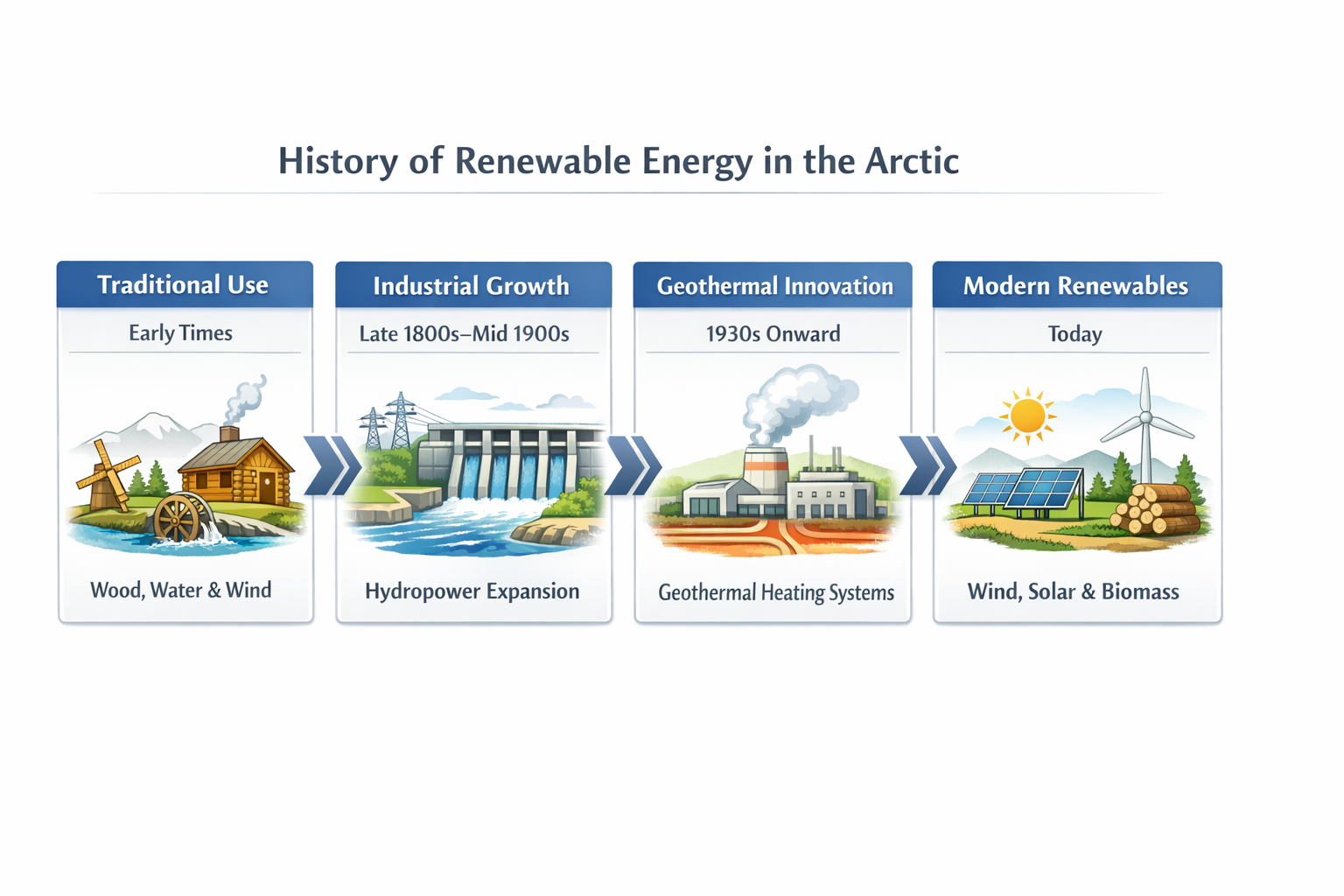
Renewable energy has long been part of life in the Arctic. Indigenous communities have traditionally relied on natural energy sources such as wood, water, and wind for heating, transport, and daily activities.
These early practices were closely adapted to local environments and can be seen as the foundation of renewable energy use in the region.
Industrial Development in the Nordic Countries
The large-scale development of renewable energy in the Arctic began with industrialisation, particularly in the Nordic countries, which have played a leading role in harnessing renewable resources.
Hydropower became especially important in Norway and Sweden from the late 19th and early 20th centuries. Abundant rivers and steep terrain made hydropower a reliable and scalable energy source.
Northern towns such as Hammerfest in Norway were among the early adopters of electric lighting powered by hydropower, reflecting the rapid expansion of electricity infrastructure in the region.
Expansion of Hydropower
Throughout the 20th century, hydropower became the backbone of electricity systems in several Arctic and sub-Arctic regions, particularly in Norway, Sweden, and parts of Canada.
Access to electricity expanded steadily, supporting industrial growth and improving living standards in northern communities.
Geothermal Energy in Iceland
Iceland has been a global pioneer in the use of geothermal energy. While geothermal heat had long been used directly from natural hot springs, modern applications began in the early 20th century.
By the 1930s, district heating systems were introduced in Reykjavík, supplying homes and public buildings with geothermal heat.
Since then, Iceland has developed extensive geothermal infrastructure, providing both heating and electricity, and today geothermal energy remains a central part of the country’s energy system.
Biomass and Local Energy Solutions
In Finland and other forest-rich regions, biomass energy, particularly from wood and forestry by-products, has played an important role in energy production.
Biomass has been used both traditionally and in modern systems for heating and combined heat and power (CHP), especially in smaller communities.
From Tradition to Transition
Historically, renewable energy in the Arctic developed in response to local resource availability and practical needs. Today, these early systems form the basis for a broader transition toward modern renewable energy technologies, including wind, solar, and hybrid systems.
The Arctic’s experience with renewable energy, both traditional and industrial, continues to shape its role in the global shift toward more sustainable energy systems.
Sources: IRENA, Renewable Energy, ACIA Report