Case study: Kárahnjúkar in Iceland
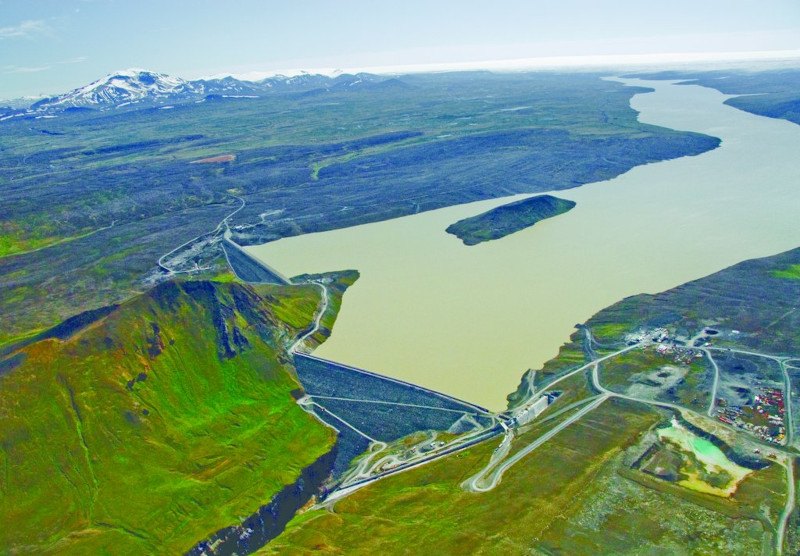
The Kárahnjúkar Hydropower Project, completed in 2007, is one of the largest energy projects in Iceland.
Located in East Iceland, it harnesses glacial rivers originating from the Vatnajökull glacier, primarily Jökulsá á Dal and Jökulsá í Fljótsdal.
Key characteristics include:
- Installed capacity: ~690 MW
- Annual generation: ~4,600 GWh
- Dam type: Concrete-faced rockfill dam
- Height: 198 meters (one of the tallest in Europe)
- Reservoir: Hálslón (approx. 57 km²)
- Extensive tunnel system (~70 km)
The project supplies electricity primarily to the Alcoa aluminum smelter in Reyðarfjörður.
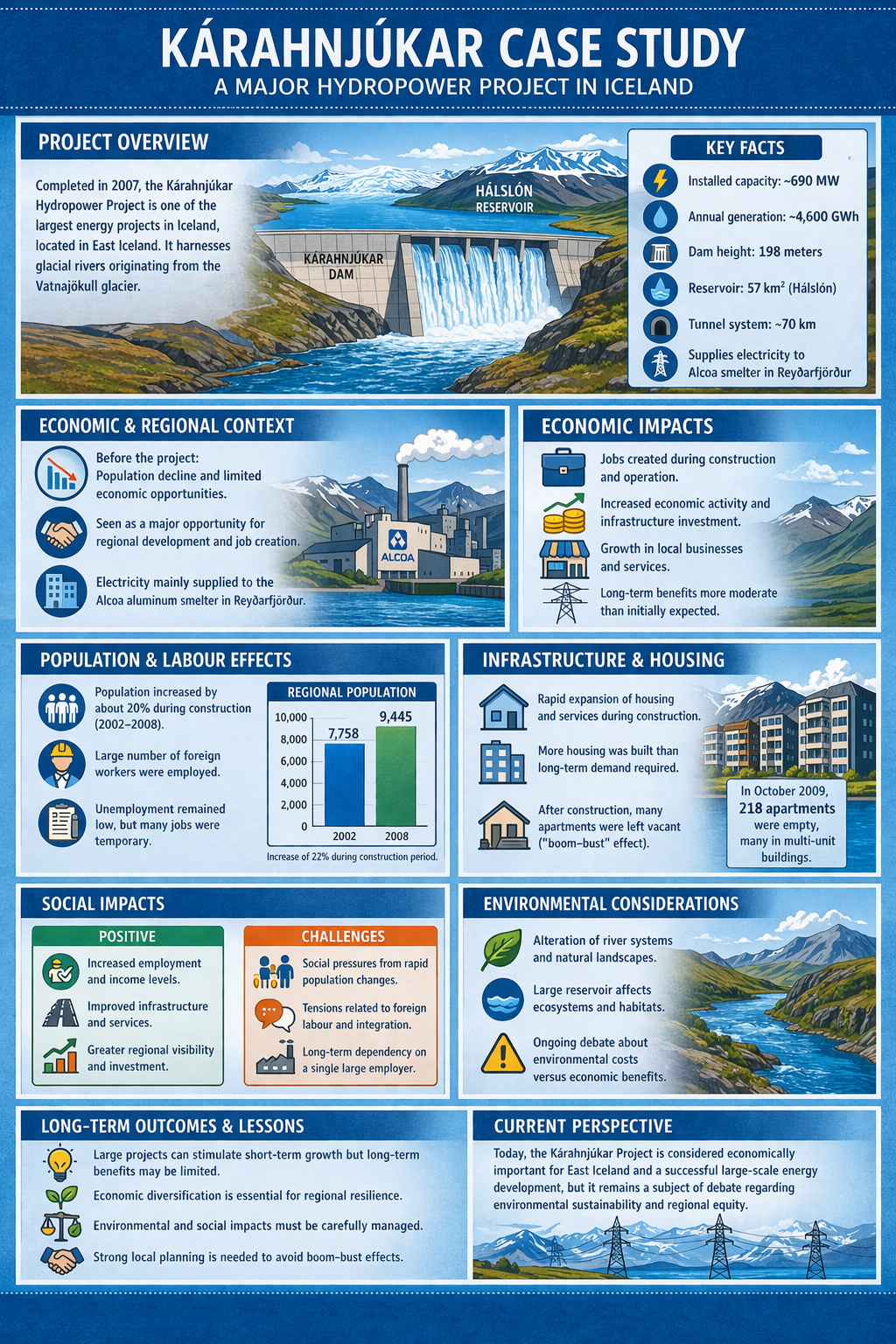 Economic and Regional Context
Prior to the project, East Iceland experienced:
- Population decline
- Limited economic diversification
- Dependence on traditional industries (e.g. fisheries)
The hydropower project was therefore seen as a major opportunity for regional development and economic revitalization.
Economic Impacts
The project had several positive economic effects:
- Creation of jobs during construction and operation
- Increased economic activity and infrastructure investment
- Growth in local businesses and services
- Strengthening of regional energy supply
However, the long-term economic benefits were more moderate than initially expected, particularly in terms of how much income remained in the local region.
Population and Labour Effects
During the construction phase (early 2000s):
- The regional population increased significantly (around 20% growth)
- A large number of foreign workers were employed
- Local unemployment remained low
After construction, population growth stabilized, highlighting the temporary nature of many construction-related jobs.
Infrastructure and Housing Challenges
Rapid development created pressure on local infrastructure:
- Significant expansion of housing and services
- Over-construction of housing during the boom period
- Post-construction decline led to vacant housing and reduced demand
This reflects a common pattern in large-scale industrial projects, often referred to as “boom–bust dynamics.”
Social Impacts
The project had mixed social outcomes:
Positive:
- Increased employment and income levels
- Improved infrastructure and services
- Greater regional visibility and investment
Challenges:
- Social pressures linked to rapid population changes
- Tensions related to foreign labour and integration
- Long-term dependency on a single large employer
Environmental Considerations
The Kárahnjúkar project was highly controversial due to environmental concerns:
- Alteration of river systems and landscapes
- Creation of large reservoirs affecting ecosystems
- Impact on wilderness areas and biodiversity
An Environmental Impact Assessment (EIA) was conducted, but debates about environmental costs versus economic benefits remain ongoing.
Link to Industry: Alcoa Smelter
The project is closely tied to the Alcoa aluminum smelter, which:
- Provides long-term employment (hundreds of jobs)
- Uses the majority of the electricity produced
- Connects local energy production to global industrial markets
This highlights the role of Arctic megaprojects in supplying global value chains, rather than purely local markets.
Long-Term Outcomes and Lessons
The Kárahnjúkar project illustrates key lessons for Arctic megaprojects:
- Large projects can stimulate short-term growth, but long-term benefits may be uneven
- Economic diversification is essential for regional resilience
- Environmental and social impacts must be carefully managed
- Strong local planning is needed to avoid boom–bust effects
Current Perspective
Today, the project is generally considered:
- Economically important for East Iceland
- A successful example of large-scale energy development
- But also a case of ongoing debate regarding environmental sustainability and regional equity
Sources:Megaprojects in the Circumpolar NorthKárahnjúkar websiteRHA